


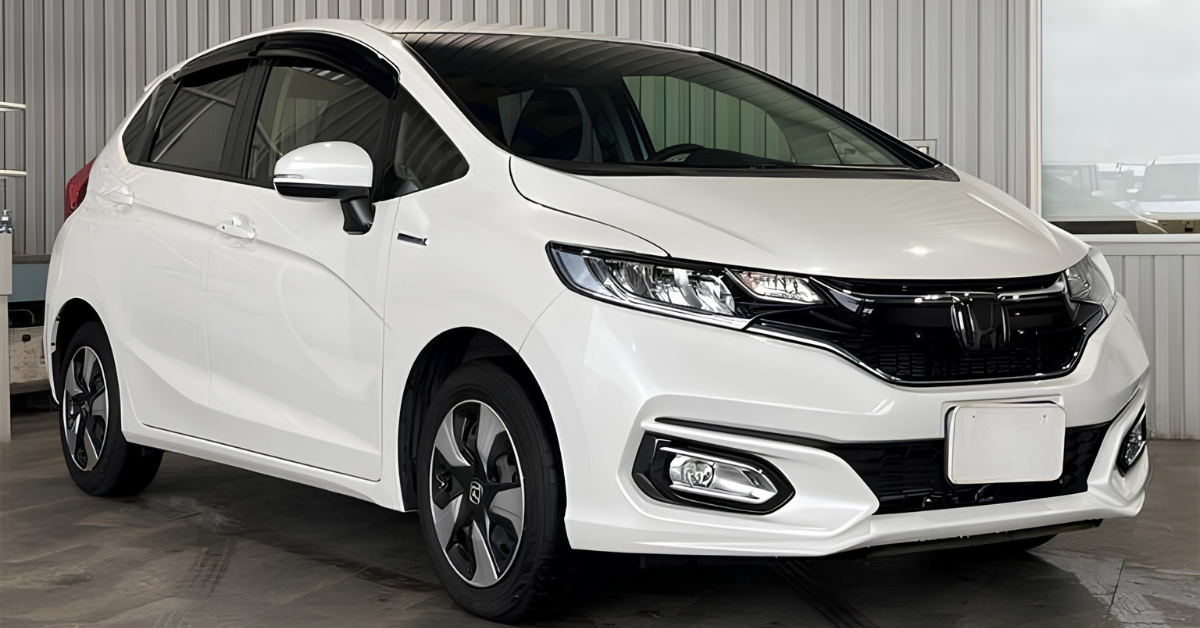
Fuel prices in Kenya and across the world continue to rise steadily, and Nairobi traffic shows no signs of easing.
For Kenyan drivers, hybrid cars offer a compelling solution, lower fuel costs, reduced emissions, and Japanese reliability. If you’re searching for hybrid cars for sale Kenya, importing directly from Japan unlocks better selection, lower prices, and access to models not officially sold locally.
This guide covers everything you need to know before you buy and drive a hybrid car. From how hybrids work, their pros and cons, the top 5 models for Kenyan roads, fuel efficiency comparisons, maintenance costs, to reliable SUV options, and where to buy.
For detailed customs procedures, KEBS inspection requirements, refer to our Import cars from Japan to Kenya import guide .
How Do Hybrid Cars Work?
Hybrid cars combine a gasoline engine with an electric motor and a small battery pack. Unlike pure EVs, hybrids never need plugging in. The battery charges automatically while driving through regenerative braking and engine power.
Three Main Hybrid Systems in Japanese Cars:
| System | Manufacturer | How It Works | Best For |
|---|---|---|---|
| Hybrid Synergy Drive (HSD) | Toyota/Lexus | Seamless switching between gas, electric, or both | Overall reliability and fuel economy |
| e-Power | Nissan | Gas engine acts as generator; wheels always driven by electric motor | EV-like driving feel without plugging in |
| i-MMD | Honda | Switches between electric, hybrid, and gas-only modes | Sporty driving and highway efficiency |
Are They Reliable? Yes, extremely.
For Kenyan buyers seeking hybrid cars for sale, Japanese hybrids offer proven reliability backed by auction sheet transparency.
Key reliability factor: Look for a Grade 4.5 or 5 with low mileage (Preferably under 40,000km). At that age and mileage, the hybrid battery is almost guaranteed to be in excellent condition regardless of the lack of a specific “health report on the auction sheet”.
For example, Toyota hybrids routinely exceed 300,000 km with original batteries. Nairobi’s matatu industry has adopted hybrids like the Toyota Aqua for their durability and 30+ km/L fuel economy.
To understand more on how to read those auction sheets and navigate the bidding process, check out our guide on how Japanese auctions work .
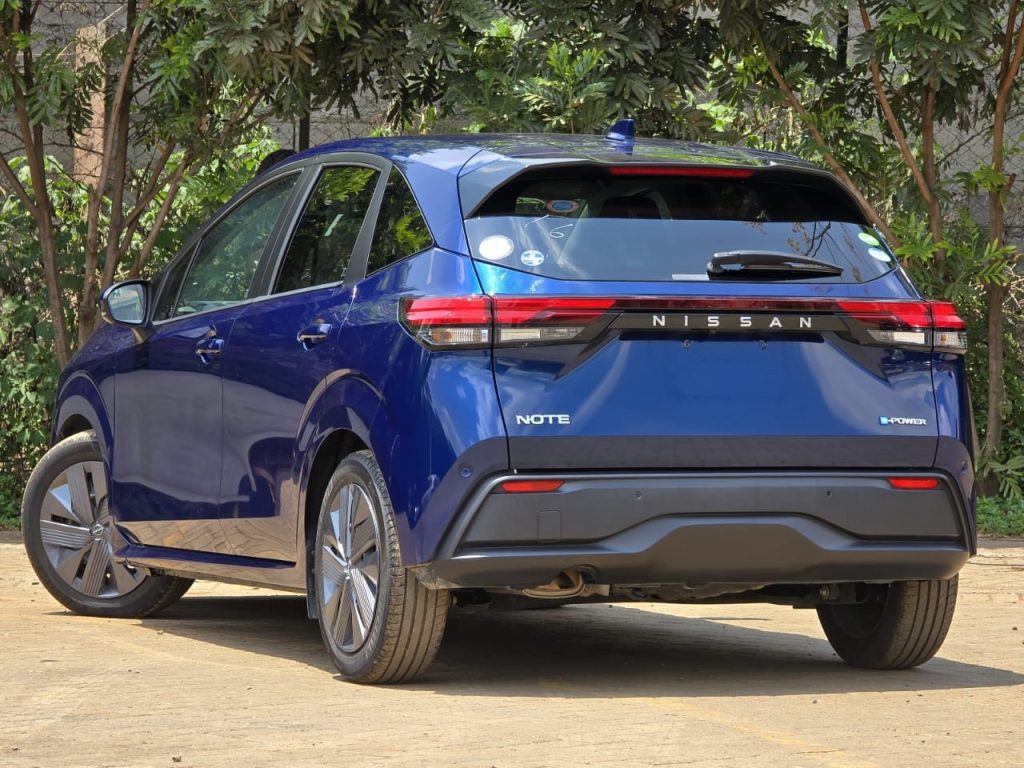
5 Pros and Cons of Driving Hybrid Cars
Do hybrids have better mileage? Yes — they typically achieve 2–3x better fuel economy than equivalent gasoline cars.
Lets explore more benefits and limitations of driving a hybrid car in 2026.
5 Pros:
| Pro | Explanation |
|---|---|
| 1. Exceptional Fuel Economy | Toyota Aqua: 35–40 km/L. Nissan Note e-Power: 30–35 km/L. Compare to gasoline Toyota Vitz : 15–18 km/L. |
| 2. Lower Running Costs | Fewer trips to the pump. Nairobi to Mombasa round trip costs ~3,000 KES in a hybrid vs ~7,000 KES in a gasoline car. |
| 3. Tax Advantages | Kenya offers reduced import duty (25% vs higher rates for large-engine cars) and lower excise duty for hybrids. |
| 4. Quiet, Smooth Driving | Electric-only mode at low speeds means silent operation in traffic. |
| 5. High Resale Value | Kenyan buyers increasingly demand hybrids. A well-maintained Toyota Aqua or Prius sells quickly locally. |
5 Cons:
| Con | Explanation |
|---|---|
| 1. Higher Initial Purchase Price | Hybrids cost 15–25% more than equivalent gasoline models at auction. However, fuel savings recover the difference within 2–3 years. |
| 2. Battery Replacement Cost | Replacement hybrid battery: 150,000–300,000 KES. Most last 10–15 years or 300,000+ km. |
| 3. Specialist Servicing | Not every mechanic understands hybrid systems. Nairobi has growing specialist shops (e.g., Hybrid Auto Solutions, Tokyo Garage). |
| 4. Less Power for Highway Passing | Small hybrids (Aqua, Fit) excel in city traffic but feel underpowered on Naivasha or Mombasa Road hills. |
| 5. Complex Auction Sheet Reading | Hybrid-specific terms (battery grade, inverter condition) require expert interpretation. Experts like TokyoCarZ can help provide translation and analysis. |
Hybrid Cars for Sale: 5 Best Selling in Kenya (April 2026)
Ranked based on TokyoCarZ export data, Kenyan registration trends, and local demand.
#1: Toyota Aqua (Prius C)
| Specification | Detail |
|---|---|
| Fuel Economy | 35–40 km/L |
| Typical Auction Grade | 3.5 – 4.0 |
| Kenya Popularity | Extremely high – #1 hybrid on Kenyan roads |
| 2026 Price Range (CIF) | $5,000 – $9,000 USD |
Why It Sells: The Aqua is affordable, incredibly fuel-efficient, and parts are widely available in Nairobi (Kirinyaga Road, Industrial Area). Consequently, it has become the go-to hybrid for Kenyan taxi operators and budget-conscious families.
What to Check: Battery health grade on auction sheet. Avoid Grade R (repaired) or vehicles with “battery replacement advised” notes.
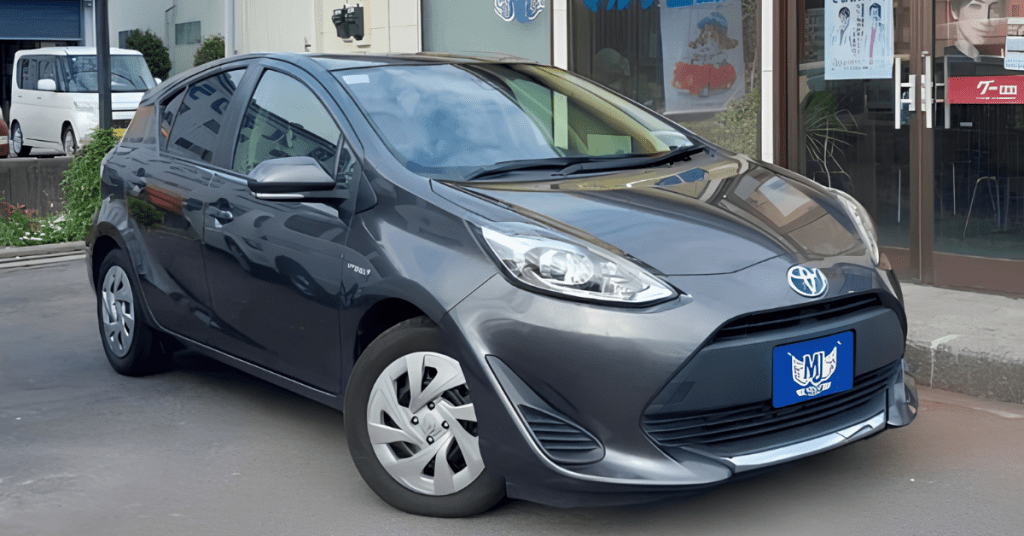
#2: Nissan Note e-Power
| Specification | Detail |
|---|---|
| Fuel Economy | 30–35 km/L |
| Typical Auction Grade | 3.5 – 4.0 |
| Kenya Popularity | Growing rapidly |
| 2026 Price Range (CIF) | $5,500 – $8,000 USD |
Why It Sells: The e-Power system drives like an electric car—instant torque, silent operation—without range anxiety. It offers more interior space than the Aqua and often costs less at auction.
What to Check: e-Power specific: inverter condition, battery health, and service history of the generator engine.
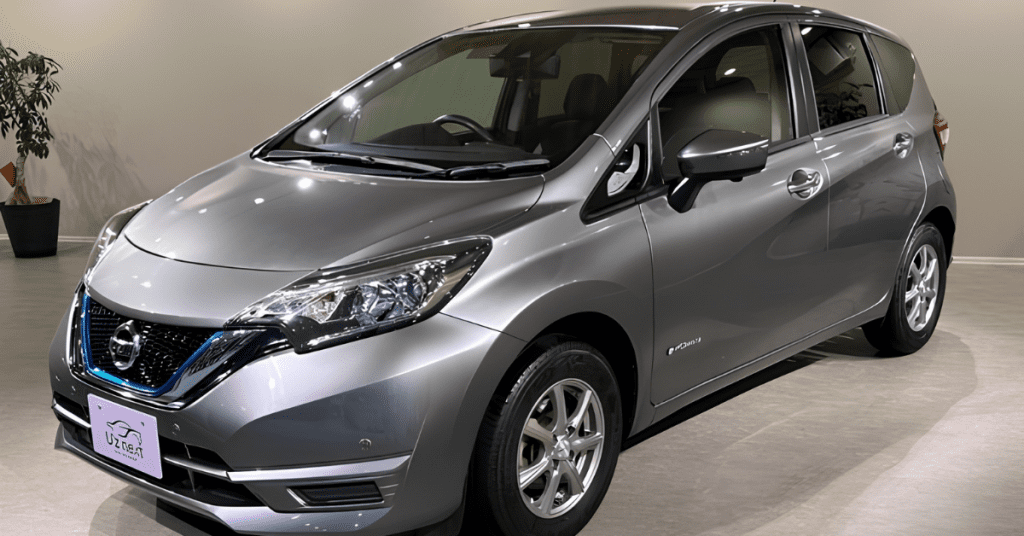
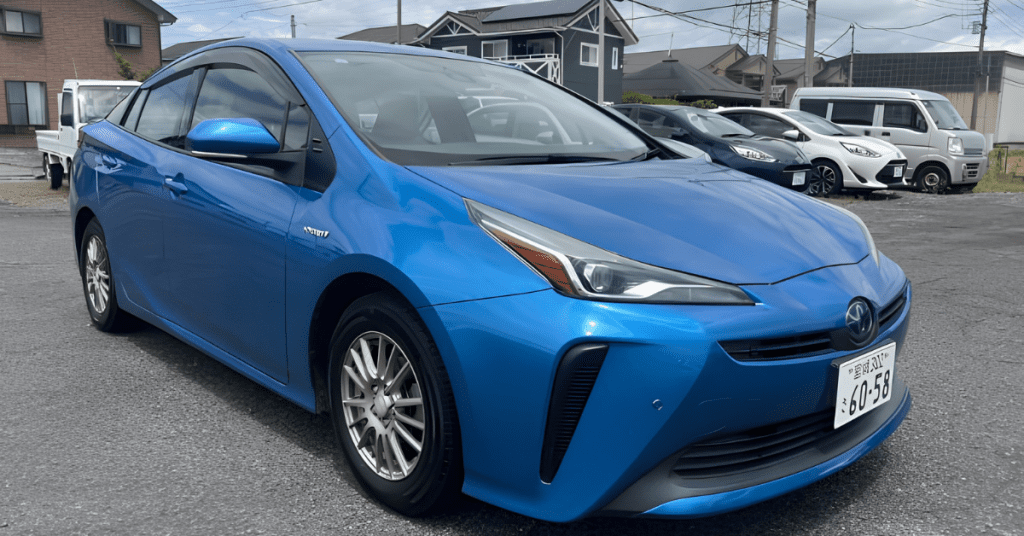
#3: Toyota Prius
| Specification | Detail |
|---|---|
| Fuel Economy | 30–35 km/L (50系) |
| Typical Auction Grade | 3.5 – 4.5 |
| Kenya Popularity | Strong among families and executives |
| 2026 Price Range (CIF) | $5,000 – $12,000 USD |
Why It Sells: The Prius is the original hybrid icon. The 50 (2015–2018) offers excellent value, while the 60 (2018–2022) adds modern safety features. The 70 (2023+) commands premium prices.
What to Check: Battery health, accident history (auction sheet triangle symbols), and service records.
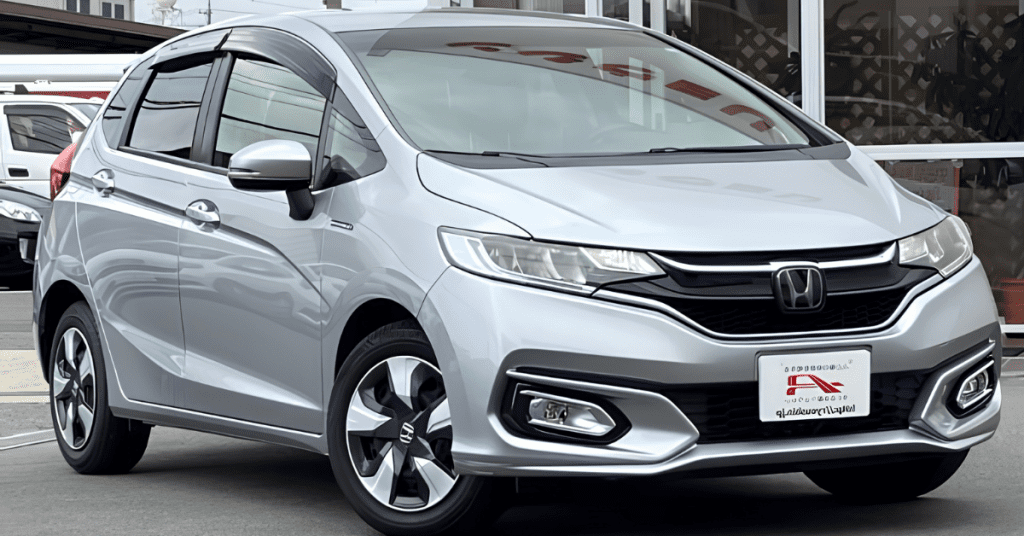
#4: Honda Fit Hybrid (Jazz)
| Specification | Detail |
|---|---|
| Fuel Economy | 25–30 km/L |
| Typical Auction Grade | 3.5 – 4.0 |
| Kenya Popularity | Moderate but loyal following |
| 2026 Price Range (CIF) | $7,000 – $9,000 USD |
Why It Sells: The Fit’s “Magic Seat” folding configuration offers exceptional cargo versatility. The i-MMD hybrid system provides a sportier driving feel than Toyota’s system.
What to Check: Dual clutch transmission (DCT) issues in earlier models (2014–2016). Later models are more reliable.
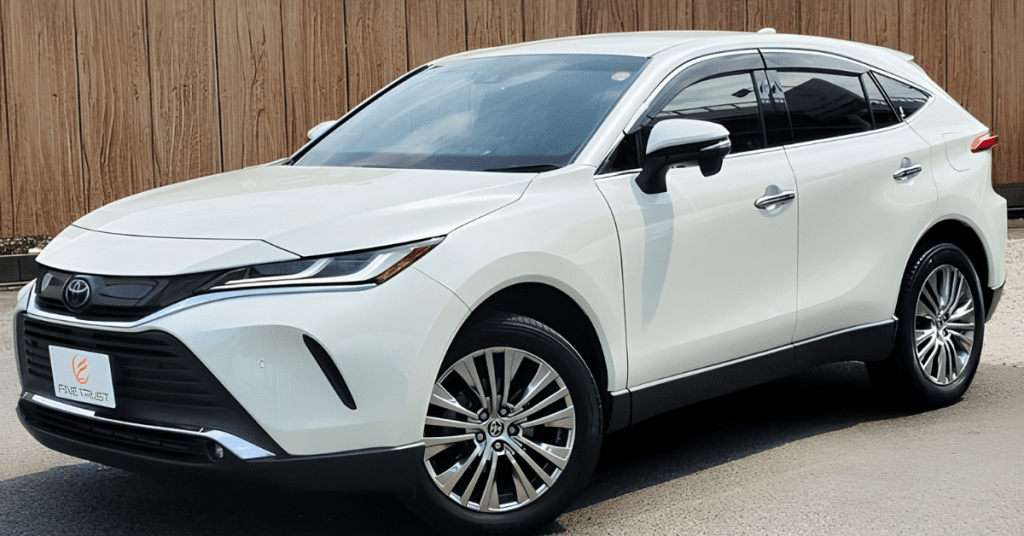
#5: Toyota Harrier Hybrid
| Specification | Detail |
|---|---|
| Fuel Economy | 18–22 km/L |
| Typical Auction Grade | 4.0 – 4.5 |
| Kenya Popularity | High among executives and families |
| 2026 Price Range (CIF) | $15,000 – $25,000 USD |
Why It Sells: The Harrier offers luxury SUV comfort with hybrid fuel economy. It is quieter and more refined than the Rav4, making it popular for Nairobi’s executive class.
What to Check: Rust (especially undercarriage), hybrid battery health, and service history.
These five models dominate the hybrid cars for sale Kenya market for good reason—reliability, fuel savings, and strong resale value.
For a broader look at which Japanese vehicles are trending globally, see our best-selling Japan used cars list .
Which Hybrid Should You Buy? A Quick Guide
| If You Drive… | Your Best Choice | Why |
|---|---|---|
| Mostly in Nairobi traffic | Toyota Aqua | 36 km/L = fewest trips to the pump |
| Mixed city + highway | Toyota Prius | 33 km/L + longest range (1,400 km) |
| Need space for family/cargo | Nissan Note e-Power | 32 km/L + roomy interior |
| Want a sporty hatchback with flexible cargo | Honda Fit Hybrid | 28 km/L + “Magic Seats” can fold flat |
| Want a luxury SUV | Toyota Harrier Hybrid | 21 km/L – best in its class |
Frequently Asked Questions (FAQs)
Q1: Are hybrid cars suitable for Kenyan roads?
A: Absolutely. Hybrids excel in Nairobi’s stop-start traffic (regenerative braking captures energy). For rural or off-road use, consider hybrid SUVs like the Toyota Harrier or Rav4.
Q2: How long do hybrid batteries last?
A: Toyota and Honda hybrid batteries typically last 10–15 years or 300,000+ km. Nissan e-Power batteries also show strong longevity. Japanese auction sheets often include battery health assessments.
Q3: What is the 8-year rule for importing hybrids to Kenya?
Kenya allows import of vehicles manufactured in 2019 or later (as of 2026). Hybrids follow the same rule. Always verify the manufacture month on the auction sheet. Learn more about the import process from Japan to Kenya.
Q4: Do hybrids pay lower taxes in Kenya?
A: Yes. Hybrids benefit from reduced excise duty compared to large-engine gasoline cars. However, verify current KRA rates before bidding, as tax policies change.
Q5: Can I service a hybrid at a regular garage in Nairobi?
A: Some regular garages can handle basic maintenance (oil, brakes, tires). However, hybrid system repairs require specialist training. Nairobi has several dedicated hybrid service centers.
Q6: Which hybrid has the best fuel economy for Nairobi traffic?
A: The Toyota Aqua (35–40 km/L) and Nissan Note e-Power (30–35 km/L) are the most fuel-efficient for city driving. The Prius is better for mixed city-highway use.
Q7: How do I check hybrid battery health when importing from Japan?
A: Request the auction sheet and any available battery inspection report. TokyoCarZ provides pre-bid battery health verification and can arrange independent inspections.
Q8: Are hybrid cars more expensive to insure in Kenya?
A: Insurance premiums are slightly higher (10–20%) due to higher vehicle value and specialized repair costs. However, fuel savings typically offset the difference.
Q9: Can I import a hybrid SUV under 2,000cc?
A: Yes. The Honda Vezel (1.5L hybrid) and Toyota Harrier (2.0L hybrid) are popular choices. Lower engine capacity means lower excise duty.
Q10: What is the resale value of hybrids in Kenya?
A: Strong and growing. Toyota hybrids (Aqua, Prius, Harrier) hold value particularly well. As fuel prices rise, demand for efficient hybrids increases.
Conclusion
Japanese hybrid cars offer Kenyan buyers exceptional fuel economy, proven reliability, and lower running costs. The Toyota Aqua, Nissan Note e-Power, Toyota Prius, Honda Fit Hybrid, and Toyota Harrier Hybrid represent the best options for 2026.
Whether you’re a Nairobi commuter battling daily traffic or a family seeking lower fuel bills, the best hybrid Japanese cars to import from Japan to Kenya deliver real savings without compromising on quality.
Ready to import your hybrid? Visit TokyoCarZ to browse current auction inventory, request battery health checks, or contact our team for a personalized consultation. Your fuel-efficient Japanese hybrid awaits.
Related Resources:
Note: Tax rates and regulations are subject to change. Always verify current requirements with KRA, KEBS, or a licensed clearing agent before purchasing.
